Pasco's Trusted Marine Contractors  |  Call Now: (727) 597-5782
📞 (727) 597-5782
★★★★★ 5.0 Customer Rating
Fully Insured
Free Quotes
Locally Owned & Experienced
Homeowner Guide

Seawall and Dock Permit Guide for Pasco and Pinellas

Who signs off on your wall, dock or lift, what they'll want on paper, and where the state steps in.

Free Quotes
Fully Insured
Local Specialists

Quick answer

Every seawall dock permit (Pasco, Pinellas or a city between) starts with one question: which desk owns your address? Unincorporated Pasco land files with the county's Building Construction Services. Anything on Pinellas water also needs a Water and Navigation approval, city or not. State and federal rules sit on top of that, and several repair types qualify for state exemptions.

Seawall dock permits (Pasco, Pinellas) start with the address, not the project

A Holiday canal lot and a Tarpon Springs bayou lot are minutes apart, and they still answer to different rulebooks. So before you price the work, pin down three things: your county, whether the parcel sits inside a city line, and what kind of water it touches (man-made canal, tidal river, open Gulf or freshwater lake).

Don't trust the mailing address. Homes in Bayonet Point and Jasmine Estates can carry a Port Richey mailing address and still sit in unincorporated Pasco, so the county issues it, not the city. Pinellas is the other way around: the county's Water and Navigation rules reach into every city, so a Dunedin or Oldsmar owner deals with both. Want a fast answer? Look up your parcel's taxing district on the property appraiser's site. Our service area page lists the towns we cover in both counties.

Unincorporated Pasco: what Building Construction Services asks for

Pasco County Code Sec. 18-36 requires a building permit to build, alter, repair or demolish any dock or seawall, plus trade sign-offs for wiring or plumbing on one. On top of that, the county's In-Water Construction Affidavit says each in-water structure (riprap, lift, canopy, ramp, mooring piling and the rest) needs its own application.

The county's submittal list for in-water work asks for the affidavit, a site plan, signed and sealed construction plans, the waterway width, an aerial showing neighboring docks and pilings, a riparian survey at canal dead ends or converging side lines, HOA authorization for condo slips or MPUD lots, and owner authorization. Anyone working on the water needs workers' compensation under class code 6006F. You file through PascoGateway.

If you've got a lift, pay attention here. The county wants the electrical permit filed with the main one unless the plans clearly say NO ELECTRIC. If wiring turns up later, the violation lands on you, the property owner.

Permit fees come on top of the work itself. Here are our typical ranges for the jobs this guide covers:

JobOur typical rangeUnitPermit note
Seawall repair, non-structural$100 to $300per LF of affected wallThe county permits every repair
Vinyl wall with concrete cap$450 to $700per LFWithin 1 ft of the old face skips Pinellas dredge and fill
Boat lift electrical$3,000 to $5,000per liftIts own permit

Permit and engineering costs appear as separate lines on our free written estimate after we see the site.

The 2025 rewrite in plain terms

Ordinance 25-37, adopted August 19, 2025, rewrote Land Development Code Section 1001. Here's what shapes a design on a Pasco canal now:

  • One-third rule. No structure, canopy or moored boat may reach past one-third of the waterway width, the side-use lines or a channel edge, or squeeze a canal's navigable channel below 12 feet.
  • Height. Nothing may top 15 feet above mean high water. Lift canopies sit over vertical or cantilever lifts only, no more than 5 feet above the lift, and come down when officials warn of a storm.
  • New seawall line. A new wall may sit no farther out than the lesser of the neighbors' walls or your property line.
  • Older docks. A nonconforming structure that suffers major storm damage can only come back to current rules.

In Category I or II wetlands, a dock plus mooring area over 1,000 sq ft needs a DEP permit, and a new seawall in a Category I wetland is prohibited, though repairing one may be accepted.
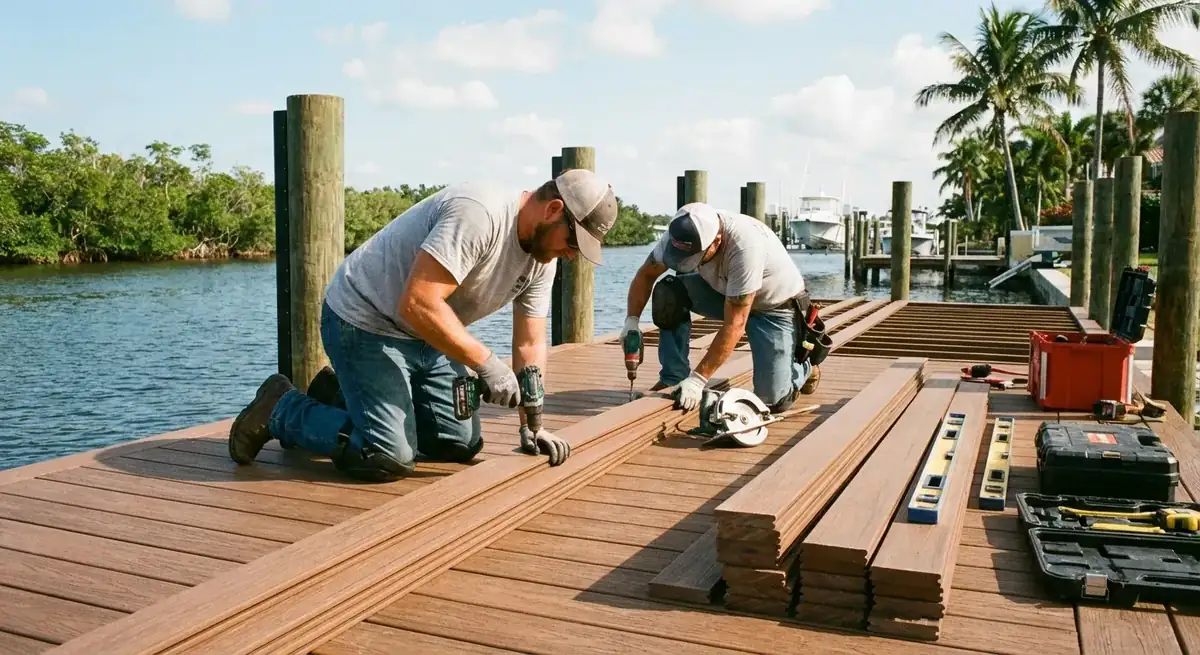

Two workers installing composite decking boards on a new dock beside wood pilings

New Port Richey and Port Richey write their own chapters

Inside New Port Richey city limits, the city's Building Division handles docks, lifts and seawall repair. Code Sec. 5-49 won't release an approval until DEP and the Army Corps have issued theirs or said none is needed, so the state step comes first. Docks there may reach no more than 25 feet into the water and must stay 12 feet off side lines, and covered lifts or covered docks are prohibited in the city.

The City of Port Richey keeps it simple with one-page checklists. A new seawall needs DEP and Corps approval plus engineered plans with a survey. A repair done size for size skips the DEP and Corps step, but you still need the city permit. The city inspects footer and steel, piling, panel reinforcement, tie beam and cap, then final. On canals the reach is one-third of the width, the deck sits no more than 1 foot above the seawall, and boathouses are banned citywide. Our Port Richey page covers the Cotee River side in more depth.

Water and Navigation applies inside every city

Pinellas County Code Sec. 58-506 makes the Water and Navigation article countywide. The county's Docks and Dredge and Fill section approves private docks, walls, riprap, tie poles and all dredging or filling, through the county access portal. The building permit for the wall itself still comes from the city, or from the county building department if you're in unincorporated Palm Harbor or East Lake.

On seawalls, Sec. 58-573 drives a lot of the cost. A brand new wall in county waters needs a dredge and fill permit. You can repair or replace an existing wall without one, as long as the new face sits no more than one foot in front of the old face. The county may require riprap at the base of new or replacement walls, or where more than 25% of a face is repaired.

For docks, Sec. 58-555 caps projection at 25% of the navigable waterway and 300 feet from the wall, with two boats moored. In unincorporated areas it also stays within half the lot's waterfront width and sit in the center third of the frontage or 50 feet from the neighbor, unless neighbors sign no-objection statements. Lake Tarpon docks stop 100 feet from the ordinary high water line.

Tarpon Springs, Oldsmar, Safety Harbor, Clearwater and Dunedin

Each of these cities puts its own step in front of the county approval:

  • Tarpon Springs holds its building permit until Water and Navigation, DEP and the Corps sign off and the City Engineer reviews the plans.
  • Oldsmar limits docks to 20 feet out from the wall line and makes owners pull the whole old piling, below the waterline too, when replacing one.
  • Safety Harbor routes docks and shoreline work through the county board, the state and the Corps; the county performs its Building Code inspections.
  • Clearwater gives city pre-approval before the county application, and boat lifts need a separate city building permit.
  • Dunedin approves every dock and wall before the county sees it.

Call the city desk first. The county will want proof the city signed off. Our Tarpon Springs marine contractor page covers the bayous and the Anclote River.

Covered dock with a small boathouse on a misty lake reflecting the sunrise

Lake Keystone and Hernando Beach answer to other counties

Keystone is unincorporated Hillsborough County. There, the Environmental Protection Commission of Hillsborough County (EPC) Wetlands Division looks at docks and walls first. Lake Keystone work goes on a Minor Work Permit Application, and EPC also reviews floating platforms, PWC lifts and canopy covers. Hillsborough keeps its 30 and 50 foot wetland setbacks even behind a seawall built along a lake. Odessa lake lots on the Pasco side of the line follow the county's rules instead.

Hernando Beach is unincorporated Hernando County, and the Hernando County Building Division permits it under its Marine Construction Code. Bring engineered plans and a sketch of the waterway width. A dock with a lift may reach 30 feet or 20% of the waterway; seawalls need riprap facing the footer. See our Keystone lake page and Hernando Beach page for local detail.

DEP exemptions, state-owned bottom and the Army Corps

The state layer is where some of the paperwork disappears. Florida Statute 403.813(1) lists work that needs no state environmental resource permit, and a local government may not demand extra DEP verification for it. On our water that covers restoring a wall within 18 inches waterward of the old one, walls in man-made canals, private docks of 1,000 sq ft or less over the water (500 in Outstanding Florida Waters), and rebuilding one within 5 feet of the same spot and no bigger. Bigger single-family builds with up to two lifts can use DEP's general permit up to 2,000 sq ft.

Here's the catch: an exemption doesn't settle who owns the bottom. Rule 18-21.005 grants consent by rule for exempt work outside aquatic preserves; work beyond that, such as a new or replacement wall reaching up to 3 feet waterward of the high water line, needs a written letter of consent. DEP's Southwest District handout lists free self-certification, $100 exemption verification, a $250 general permit and a $420 dock individual permit; check those fees with DEP before you file.

Federal 404 permitting went back to the Army Corps after a February 15, 2024 court ruling. The Corps' 2026 nationwide permits run March 15, 2026 to March 15, 2031. Nationwide Permit 13 needs a notice to the Corps when a project runs longer than 500 feet, discharges fill into special aquatic sites, or places more than an average of one cubic yard of fill per running foot below the high tide line, so count the riprap.

Flood maps: one more check at your address

Permit offices also look at flood zones. FEMA's flood maps for Pasco took effect June 5, 2020, and Pinellas's on August 24, 2021. Base flood elevations change block by block. FEMA's data puts a Gulf-front point near Hudson in Zone VE at 15 feet, a Gulf Harbors canal point in Zone AE at 10 feet, a spot on the lower Pithlachascotee waterfront in Port Richey in AE at 11 feet, and a Palm Harbor-area point in AE at 11 feet. Those are sample points, not your address, so look yours up on the FEMA map. The county's submittal list adds that work in a special flood hazard area has to meet floodplain construction rules.

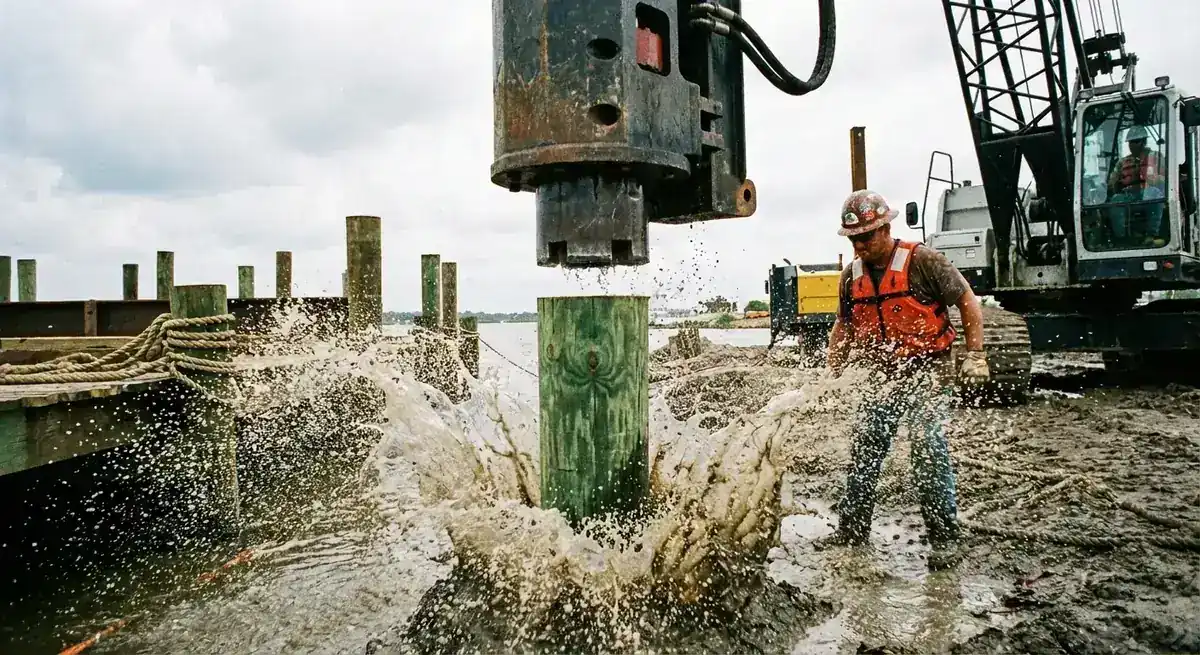
Pile driver hammering a treated wood dock piling into the shoreline with mud spraying

What to gather before you call any desk

Pull together the deed or other proof of upland interest, because DEP asks for it when a letter of consent covers state-owned bottom. Add a survey if your canal ends in a dead end or your side lines converge, since a riparian survey is required there, plus HOA authorization for a condo slip or MPUD lot and the signature of the owner of the upland and waterway parcel. Photos of the existing structure, any old approvals and the waterway width round out the file.

Neighbors matter too. An aerial showing their structures goes with the application, and in unincorporated Pinellas neighbors can sign no-objection statements that waive the center-third and 50-foot setbacks. DEP's guide lists a similar waiver for its 25-foot riparian setback.

What the ground and water do to a set of plans

Pasco asks for signed and sealed plans, and the ground and water here are what those plans have to answer to. USDA soil maps rate the fill under parts of the Pasco canal communities (Udalfic Arents) High for concrete corrosion, and Aripeka fine sand along the coast High for steel corrosion. Homosassa mucky fine sandy loam, a very poorly drained tidal soil that floods very frequently, rates High for both. Farther south, Myakka soils are rated High for both too, while Matlacha and St. Augustine fill rates Low for concrete and High for steel.

Water is the other half. NOAA's Clearwater Beach gauge, the only water-level station on this stretch of coast, shows a mean tide range of 1.89 ft and a relative sea level rise of 1.72 inches per decade. Hurricane Helene put that gauge 6.67 ft above mean higher high water, a station record.

After a storm: the shortcuts and their clocks

Storm damage opens a few shortcuts, and each one has a clock. Florida's exemption for restoring a wall or rebuilding a dock applies when the structure was made non-functional within the last year by a discrete event such as a storm, flood, accident or fire (Rule 62-330.051). After a natural disaster, Pinellas can turn on an exemption that lets owners or their contractors rebuild storm-damaged docks to the prior permitted layout, with 48 hours of advance notice to the county. In Port Richey, a certified-mail notice about a derelict dock starts a 15-day clock to begin repairs. None of this removes the 811 call or the Notice of Commencement, so photograph the damage and date it before anything moves.

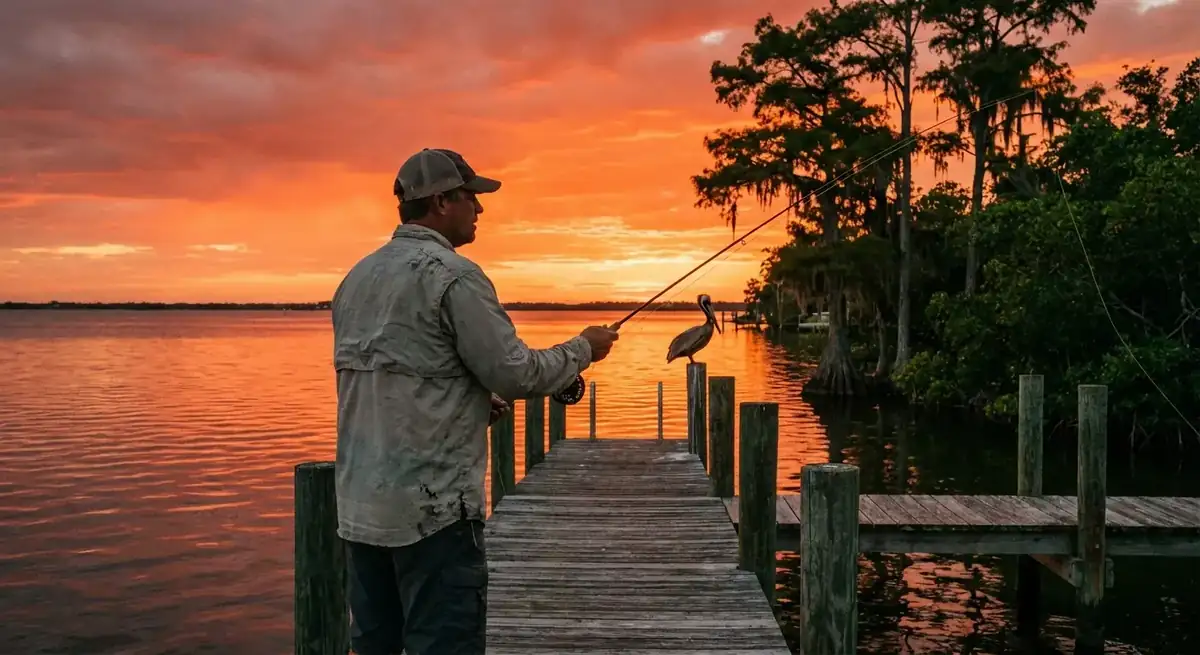
Man fly fishing from a weathered wood dock with pilings at sunset

Fees you can look up before you apply

Fees for a seawall dock permit (Pasco, Pinellas) differ by office. These are the Water and Navigation fees effective October 1, 2026 (city and county building permit fees are separate):

Pinellas W&N applicationFee
Poles, lifts or lower landings, no new piling$840
New deck under 250 sq ft$1,120
New deck 250 to 499 sq ft$1,220
New deck 500 to 999 sq ft$1,290
New deck over 1,000 sq ft$1,380
Repair of a previously permitted structure$560
Dock roof$910
Dredge or fill under 101 cubic yards$1,060

Pasco sets its own fees by resolution, so ask Building Construction Services for the current figure.

Notice of Commencement, 811 tickets and owner signatures

Two state rules sit under every seawall dock permit (Pasco, Pinellas or a city desk). Under Florida Statute 713.13, the owner must record a Notice of Commencement and post a copy at the site before work starts on any improvement over $2,500. Statute 713.135 separately makes the permit office collect a copy before the first inspection when the contract tops $5,000. Pasco's owner-builder sheet and Port Richey's checklist mention $5,000 for their own paperwork, but the recording duty starts above $2,500. Only the owner signs it. It's void if work doesn't start within 90 days, and it expires after a year unless it says otherwise. Pay after it lapses and you can end up paying twice.

Statute 556.105 requires notice to Sunshine 811 at least 2 full business days before digging on land and 10 full business days before excavating under state waters. A ticket is good for 30 calendar days. If the job slips past a month, call in a fresh one.

What skipping the paperwork costs later

A skipped seawall dock permit (Pasco, Pinellas or a city) costs more later. Get caught without one in Pasco and the after-the-fact fee is double the normal one plus a fine of at least $50. The structure may have to come out, too. Pinellas charges 2.5 to 5 times the normal fee plus fines. Code Sec. 114-52 in Pasco also makes owners repair or replace any wall that becomes unsound, so an unpermitted patch that fails is still your problem.

The same county lets an owner-builder or a certified or registered contractor with longshore coverage pull the permits, and Pinellas Sec. 58-510 requires Longshore and Jones Act coverage from any contractor doing the work. Ask whoever you hire for proof of coverage and check their state credentials before you sign. On residential work in Pasco, Code Sec. 18-79 says a contractor who takes more than 10% up front must apply for permits within 30 days and start within 90 days of issue unless you agree otherwise in writing.

For the work behind any seawall dock permit (Pasco, Pinellas or a city desk), see seawall repair and construction, new docks, and the repair vs replacement cost guide.

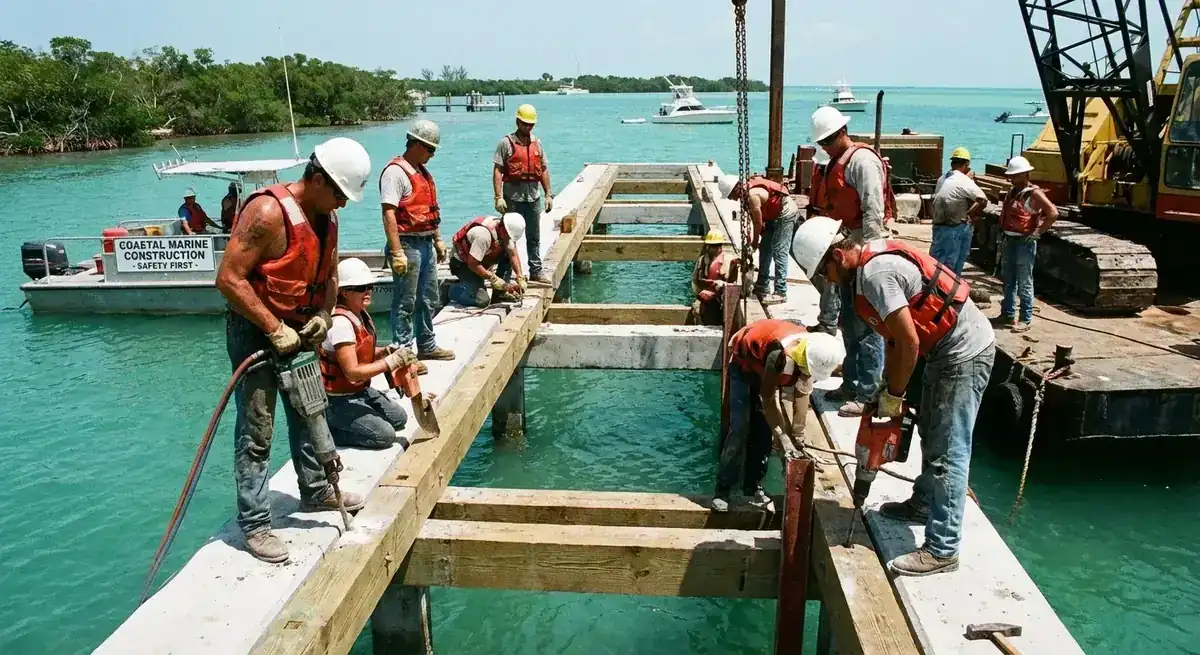
Marine crew framing a dock with timber stringers over shallow turquoise water beside a work barge

Frequently Asked Questions

Who issues a seawall dock permit: Pasco, Pinellas or the city?
It depends on the address. Unincorporated Pasco goes through the county's Building Construction Services, and inside New Port Richey or Port Richey the city issues it. In Pinellas, Water and Navigation permits docks and seawalls countywide, and the city or county building department adds its own permit for the wall. Hillsborough and Hernando lots answer to their own offices. Send us the address and we'll say which seawall dock permit (Pasco, Pinellas or a city) your lot needs.
Do replacement deck boards need approval in Pinellas County?
Not from Water and Navigation. Code Sec. 58-544 says swapping deck boards alone needs no Water and Navigation permit. Stringers, caps and floats are a different story. Repairing a permitted boat lift is also exempt unless pilings are replaced. If you live inside a city, check with the city desk, since it may still want a building permit.
Can a new wall go in front of the old one?
Yes, up to a point. Pinellas lets an existing wall be replaced without a dredge and fill permit if the new face sits no more than one foot in front of the old one. DEP's exemption allows restoration within 18 inches waterward. In unincorporated Pasco, a new wall may sit no farther out than the neighbors' walls or your property line.
Do I need state approval for a private dock?
Not if it fits the 403.813(1)(b) exemption: 1,000 sq ft or less over the water (500 in Outstanding Florida Waters), on pilings or floats, recreational, and the only exempt dock within 65 feet of shoreline. Lifts and roofs count toward that footage. Larger builds with up to two lifts can use DEP's general permit.
Does a boat lift in Pasco need its own electrical permit?
Yes, unless the plans clearly state NO ELECTRIC. The county wants it filed with the main permit. If wiring shows up later, the county writes the violation to the property owner. Lift electrical runs $3,000 to $5,000 in our typical range, shown on the written estimate.
What if my Pinellas dock was built without approval years ago?
Sec. 58-544 lets an unpermitted dock built on or before February 26, 1990 be rebuilt in its 1990 shape if at least 75% of its pilings remain and it existed within two years of the application. Newer unpermitted work goes through an after-the-fact application at 2.5 to 5 times the normal fee plus fines.
Is a Lake Keystone dock permitted by Hillsborough County building?
The EPC of Hillsborough County Wetlands Division reviews it first, using a Minor Work Permit Application under the Tampa Port Authority program it runs. Floating platforms, PWC lifts and canopy covers over the lake need Wetlands Division review too. Start there before anyone draws the dock.

Get Your Free Marine Construction Estimate

Tell us about your seawall, dock, or shoreline project and we’ll follow up with a practical next step and a no-obligation estimate.

  • 100% free, no-obligation estimates
  • Responsive follow-up from a local marine contractor
  • Support for seawall, dock, and shoreline projects
  • Clear project scoping and transparent pricing
  • Experienced crews for challenging waterfront conditions

Request a Free Quote

Fill out the form below and we’ll contact you shortly.

Page updated

Need Help Protecting Your Waterfront Property?

Talk with Pasco's trusted marine contractors about seawall repair, dock work, or a full waterfront construction project.

📞 Call (727) 597-5782 Request Quote Online
📞 Call Now Get Quote