Pasco's Trusted Marine Contractors ย |ย  Call Now: (727) 597-5782
๐Ÿ“ž (727) 597-5782
โ˜…โ˜…โ˜…โ˜…โ˜… 5.0 Customer Rating
Fully Insured
Free Quotes
Locally Owned & Experienced
Docks ยท Port Richey, FL

Dock Builders in Port Richey, FL

Canal, wide-water and Cotee River docks inside Port Richey city limits, laid out to the city's Chapter 10 rules.

Free Quotes
Fully Insured
Local Specialists

Get Your Free Marine Construction Estimate

Tell us about your seawall, dock, or shoreline project and weโ€™ll follow up with a practical next step and a no-obligation estimate.

  • 100% free, no-obligation estimates
  • Responsive follow-up from a local marine contractor
  • Support for seawall, dock, and shoreline projects
  • Clear project scoping and transparent pricing
  • Experienced crews for challenging waterfront conditions

Request a Free Quote

Fill out the form below and weโ€™ll contact you shortly.

Quick answer

On a Port Richey canal under 60 feet wide, the city's rule that a dock stay 10 feet back from the canal centerline limits you before the one-third rule does. PPH Seawalls and Docks works as a dock builder in Port Richey on canals, wide water and the Cotee River, with a free written estimate.

Two canal limits that dock builders in Port Richey draw to

Inside city limits, the city Building Department permits your project under City Code Chapter 10, and Sec. 10-333 puts two limits on every canal dock. A dock, pier or piling may extend no more than one-third of the canal width from the seawall or property line, and it can never come closer than 10 feet to the canal centerline. The width decides which one controls. These rules stop at the city line. A Port Richey mailing address outside it is unincorporated Pasco County, where the county's one-third rule applies instead, as on our Holiday page.

On a 50 foot canal, one-third is about 16.7 feet, but the centerline is 25 feet out, so the 10 foot buffer stops you at 15 feet. On a 72 foot canal, one-third is 24 feet and the centerline buffer allows 26, so one-third wins. The two meet at 60 feet. Measure your canal wall to wall before you shop for a lift, because dock builders in Port Richey have to draw to the tighter number. Our dock building service page covers decking and pilings across our area. For seawall work inside the city, see our marine page for the city.
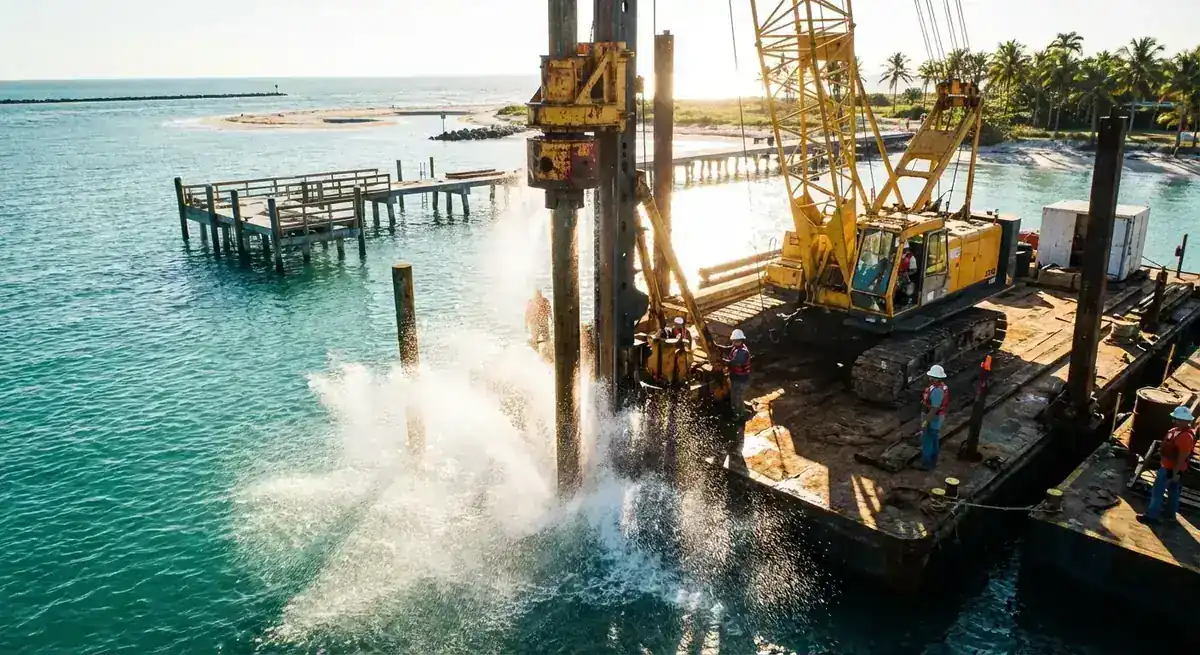
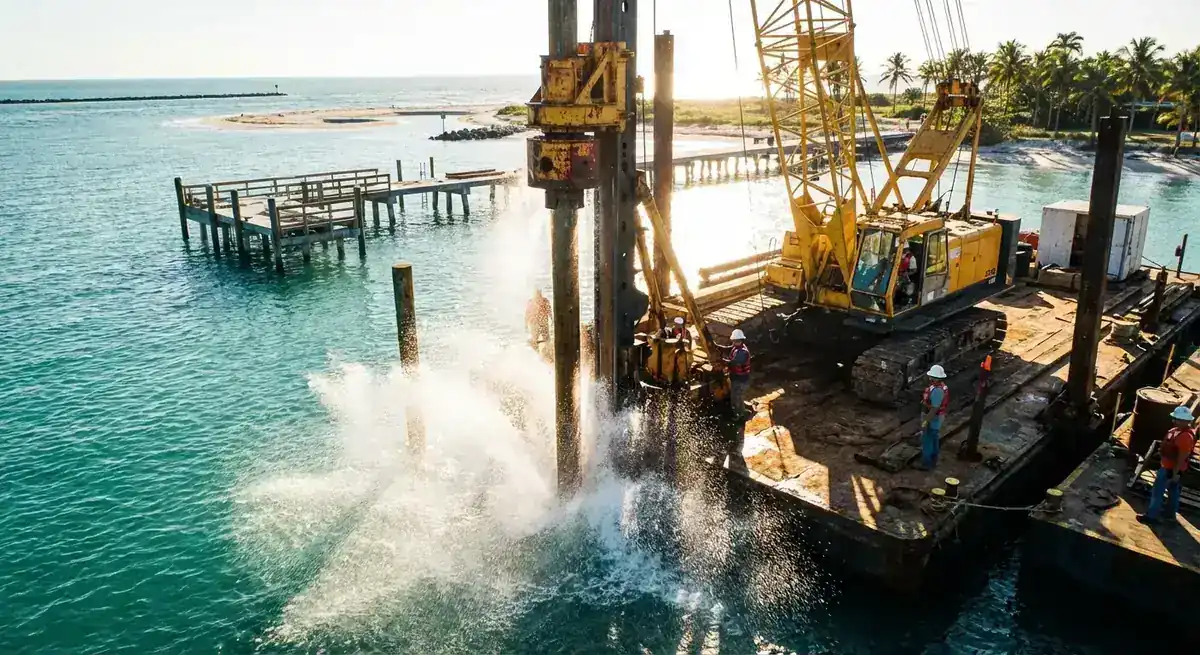
Crane barge driving a dock piling into open water with spray, crew on deck

Deck height, railings and reflectors on a city canal

The city keeps canal docks low. Under Sec. 10-333 the deck can sit no more than 1 foot above the seawall, or 3 feet above the property line where there is no wall. Railings must be at least 36 inches. Mooring pilings can stand no more than 10 feet above the seawall (12 feet where there is none), and they carry yellow or white reflectors so a boat coming down the canal at night can see them. Docks, floating docks and boat lifts all keep a 5 foot side setback; older ones that don't meet it are grandfathered and may be replaced in kind.

That 1 foot deck height matters if your seawall is low or settling. The deck rides off the wall, so a wall that needs a new cap changes the deck's height too. Fix the wall first and you won't build twice. Our seawall repair page for the city covers that side.

Materials have to suit the Florida Building Code and the Florida Fire Prevention Code (Sec. 10-281). The ground near the water is another reason to pick hardware carefully. USDA soil mapping inside the city rates Aripeka fine sand, about 27% of sampled points, High for steel corrosion, and Homosassa mucky fine sandy loam High for both steel and concrete.

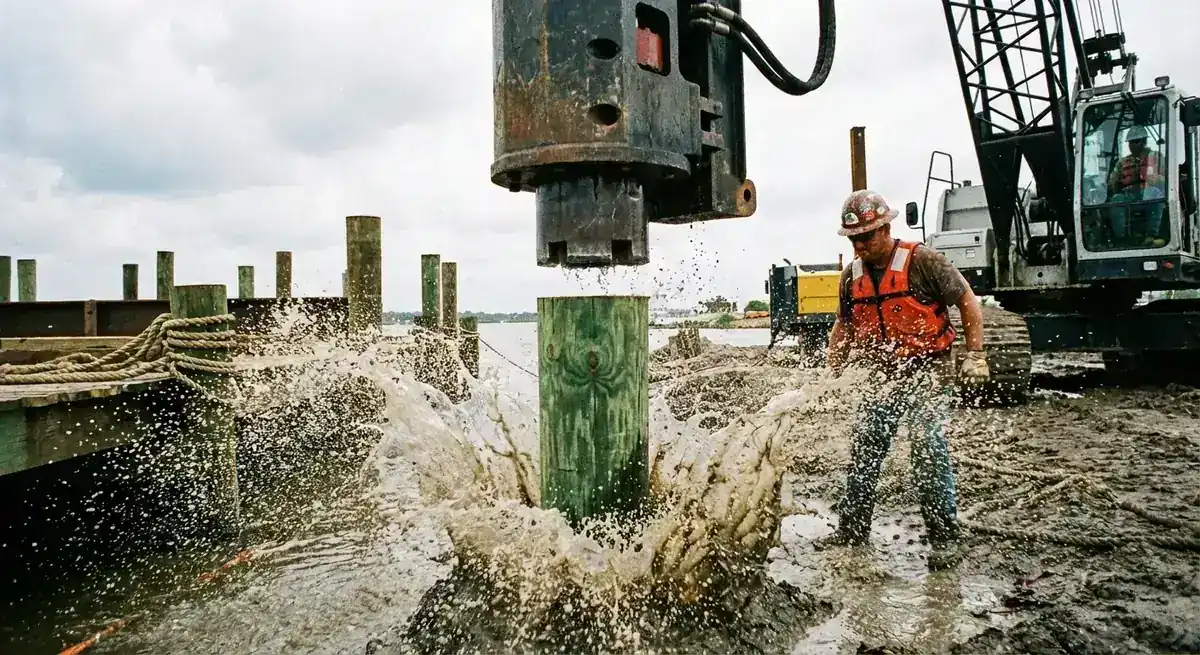
Pile driver hammering a treated wood dock piling into the shoreline with mud spraying

Long runs on wide water and the Cotee River channel

Lots on bigger water get more reach. On waterways wider than 100 feet, other than the river, Sec. 10-334 lets a dock extend up to 50 feet from the property line, with the same height limits, railings no taller than 36 inches, and a 5 foot side setback. On the Pithlachascotee River, which the code calls the Cottee River, Sec. 10-335 sets no fixed length at all. The only limit is a 100 foot setback from the marked river channel, and nothing may sit closer than 100 feet to a marked channel without a waiver from DEP and the Army Corps.

Long runs change the math. Each extra bent means more pilings, and on the river the walkway out to the platform can be the biggest part of the deck. A 70 foot walkway 5 feet wide is 350 square feet of residential deck before you add a platform. If your lot faces the river near Waterfront Park, Brasher Park or Wilmslow Park, plan the length from the marked channel inward, then decide on the platform. Keep an eye on Florida's 1,000 square foot state exemption for private docks under F.S. 403.813(1)(b) on a long river run, since the walkway, platform and any lift count toward it.

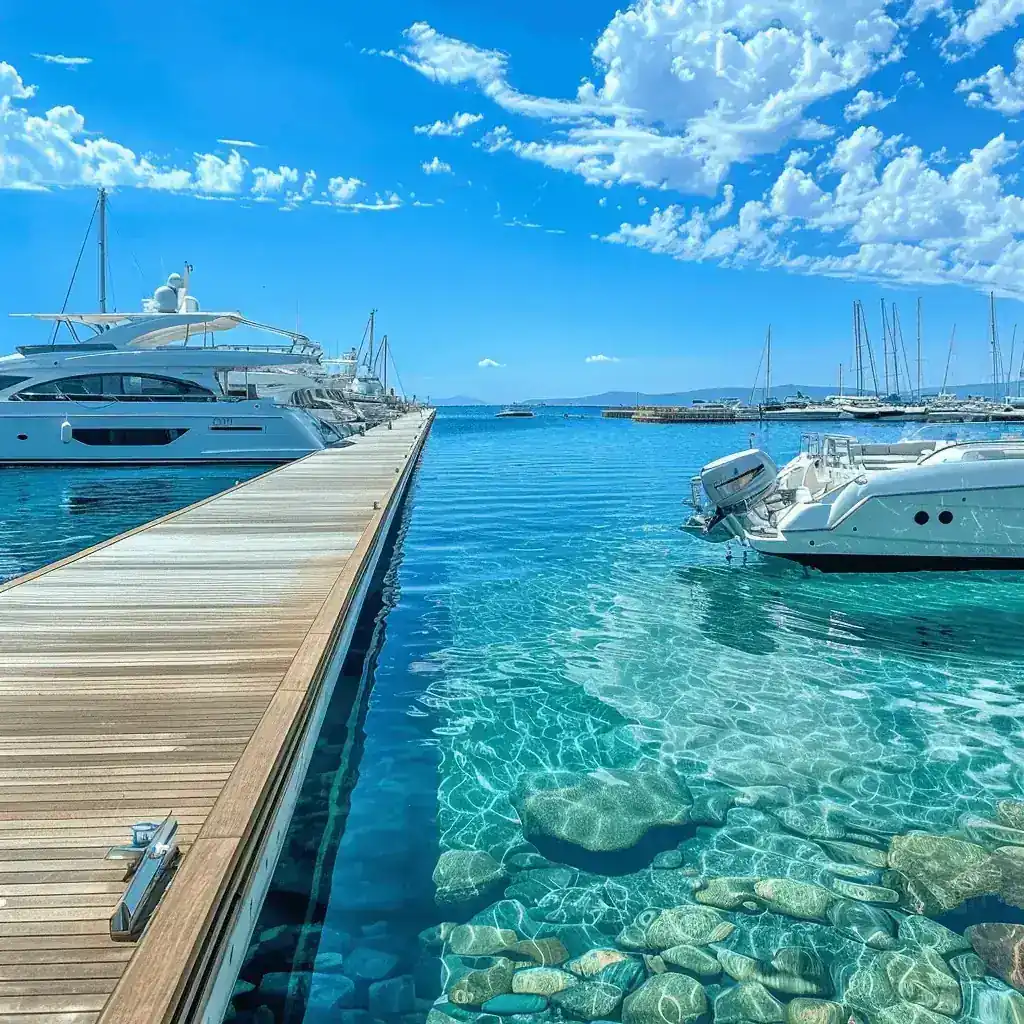
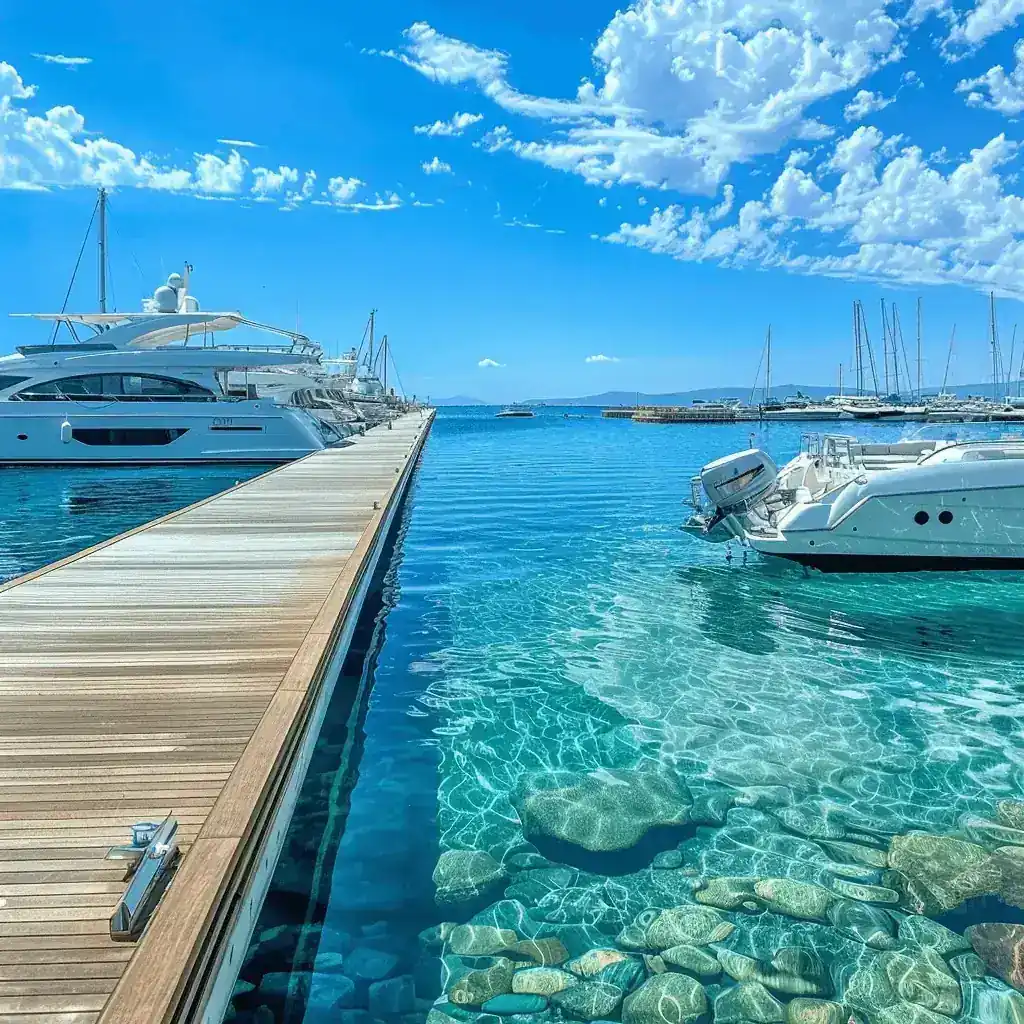
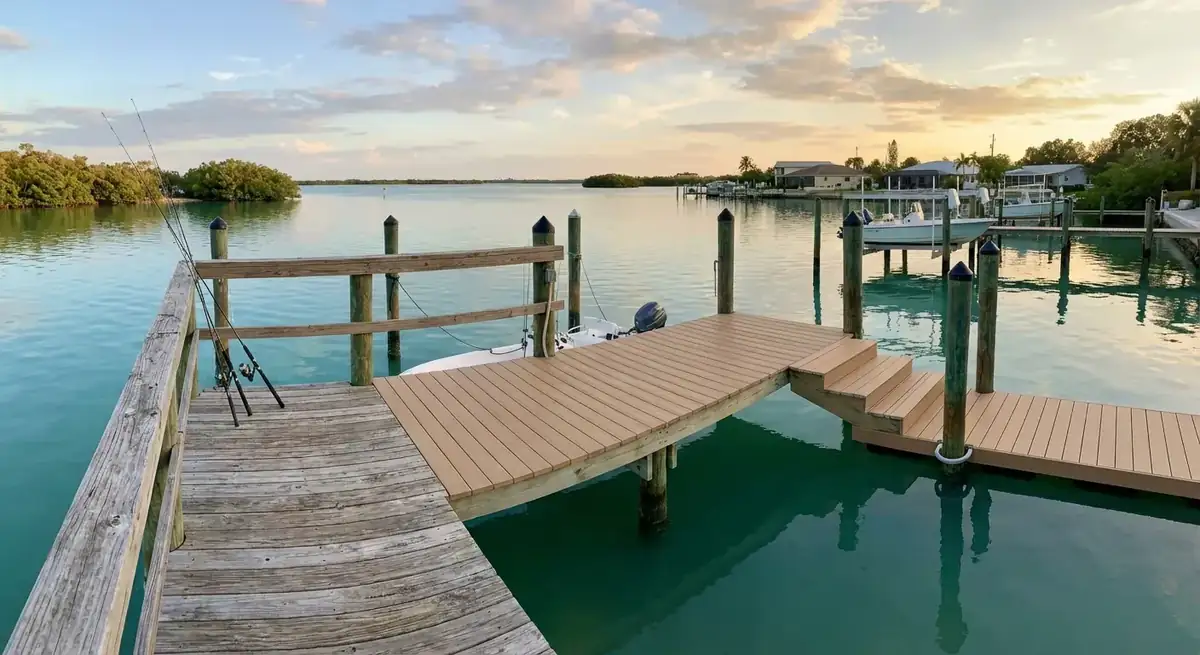
Long wood plank marina dock beside moored yachts over clear turquoise water

Slips, lifts and wiring under the city checklist

Covered storage is out. Sec. 10-279 prohibits all boathouses and boat shelters within city limits. A boat slip cut into the lot may go no deeper than 22 feet, has to sit 25 feet off the side lines, and can be no wider than 15 feet between retaining walls.

The city's dock and boat lift permit checklist spells out what a lift needs. That's DEP and Army Corps approval if the lift is new, a permit application, and engineered plans showing setback and location. If the lift is not manual, you need an electrical subcontractor or a separate electrical permit. A lift that already exists still needs an electrical permit, with plans for how it connects to power, before a motor goes on. The city lists a single final inspection for docks and lifts.

Our typical range for a 4-post lift of 10,000 to 16,000 lb on new pilings is $18,000 to $28,000 installed, and lift electrical runs $3,000 to $5,000 on its own permit. Our boat lift installation page covers sizing a lift to the boat. Dock builders in Port Richey can set the lift pilings during the same mobilization as the dock.

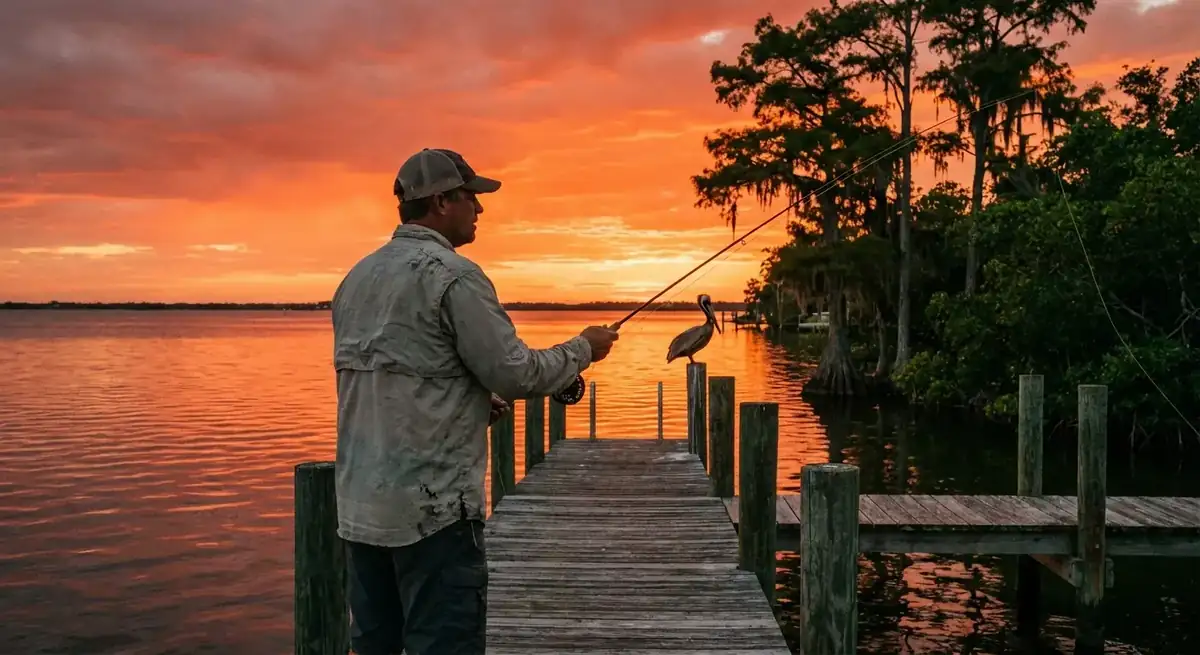
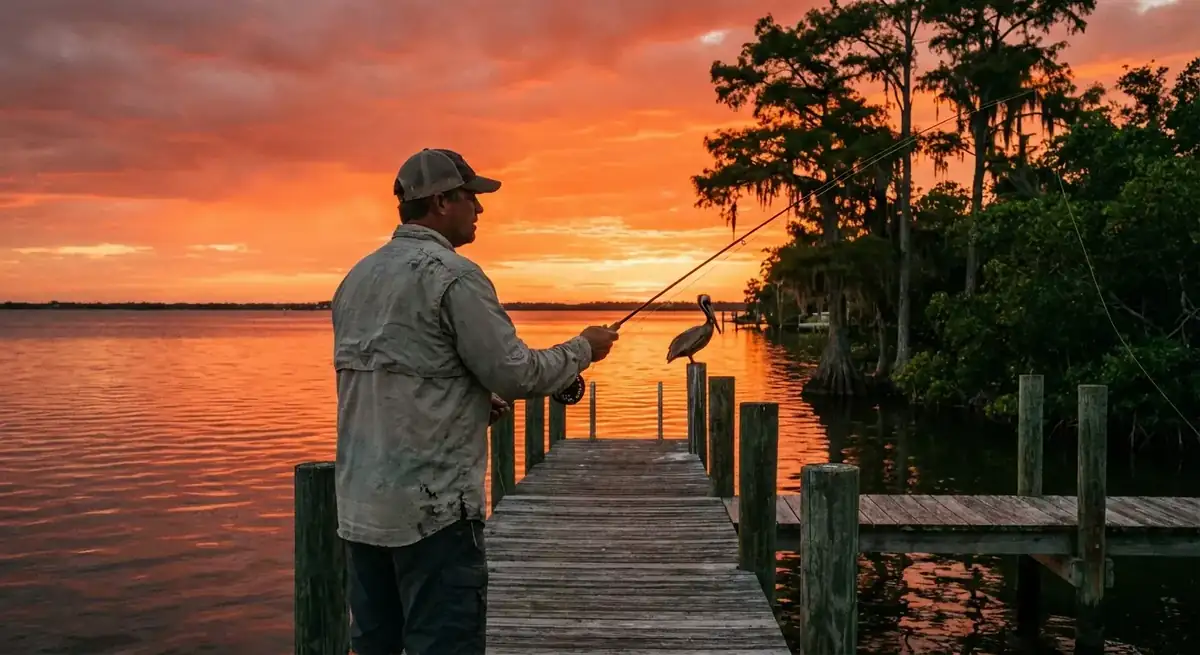
Man fly fishing from a weathered wood dock with pilings at sunset

City paperwork and price quotes from dock builders in Port Richey

The city's order is set by Sec. 10-314: the application goes to the building and zoning official for a letter of compliance, that letter goes with the application to DEP, and the city issues the permit, then a certificate of occupancy when the dock is done. For a new dock, the checklist asks for DEP and Army Corps approval, engineered plans with setback and location, and an owner-builder affidavit if you pull it yourself. An existing dock rebuilt size for size skips DEP and the Corps but still needs the city permit, and minor repairs need none.

On the Notice of Commencement, the city's checklist names $5,000 or more. Florida law sets a lower bar. The owner records a notice once the contract tops $2,500, and above $5,000 the building office also wants a copy before the first inspection. Our dock permit guide covers both.

Our typical range for a fixed wood deck on new pilings is $60 to $110 per square foot of deck. A 240 square foot canal deck comes to 240 sq ft x $60 to $110 = $14,400 to $26,400 in deck alone. A 420 square foot river deck in composite is 420 sq ft x $90 to $150 = $37,800 to $63,000. Our typical fixed build without a lift is $20,000 to $50,000. One with a lift added is $30,000 to $85,000. Dock builders in Port Richey at PPH Seawalls and Docks give every owner a free written estimate after we see the site.

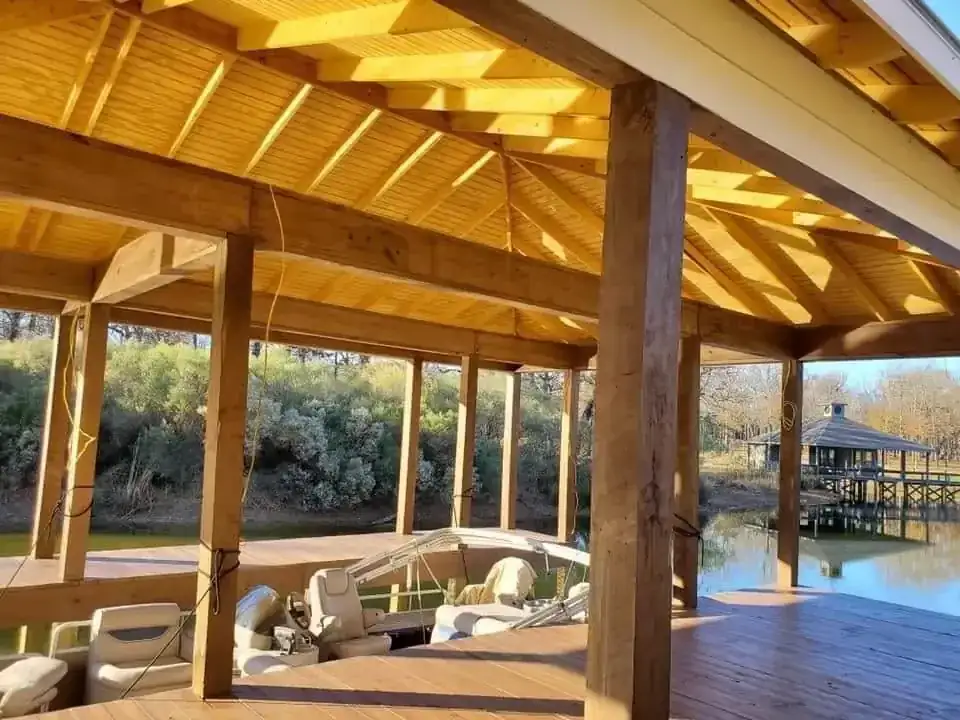
Covered wood boathouse dock with exposed rafters sheltering a pontoon boat on a lake

Why Waterfront Owners Choose PPH

Marine construction demands the right materials, permitting knowledge, and field experience. That is where we focus.

๐Ÿ› 

Marine Construction Experience

Decades of hands-on seawall, dock, and shoreline work across Florida waterfront properties.

๐ŸŒŠ

Built for Coastal Conditions

We understand tides, salt exposure, erosion pressure, and the structural demands of marine environments.

๐Ÿ“‹

Permit & Code Knowledge

We help navigate local permit requirements and keep projects aligned with the right agencies.

โœ…

Fully Insured

Professional crews, proper coverage, and a process built around safety and accountability.

๐Ÿ’ฐ

Clear Estimates

Straightforward project scoping and pricing before work begins.

๐Ÿ“

Local Service Area

Serving Pasco, Pinellas, and Hernando Counties with responsive local support.

How We Handle Your Project

A proven step-by-step process that keeps your project moving cleanly and professionally.

01

Site Assessment

We inspect your waterfront property, assess soil conditions, water depth, and existing structures.

02

Permitting

We handle all county, state, and Army Corps of Engineers permits required for marine construction in Florida.

03

Engineering & Design

Our team designs the structure to meet Florida building codes and withstand coastal conditions.

04

Construction

We install pilings, pour concrete, build dock framing, and complete all structural work.

05

Final Inspection

We verify all work meets permit requirements, clean the site, and walk you through the finished project.

Recent Project Photos

Examples of our recent work and the quality we bring to every installation.

What Our Clients Say

5-star feedback from 3 local customers.

Frequently Asked Questions

Is a size-for-size dock replacement in Port Richey free of DEP review?
Per the city's dock checklist, yes: an existing dock rebuilt size for size needs no DEP or Army Corps approval. It still needs a city permit unless the work is only minor repairs. Port Richey's code also says a nonconforming structure has to meet today's rules if 75% of it is destroyed, so a storm-flattened dock may not count as a simple swap.
How close to the canal centerline can dock builders in Port Richey build?
No closer than 10 feet, under City Code Sec. 10-333, and no farther out than one-third of the canal width. On canals narrower than 60 feet the centerline rule is the tighter one. A 50 foot canal allows 15 feet, not 16.7. Mooring pilings count toward the reach too, so place them inside the same line.
How tall can mooring pilings be on a city canal?
No more than 10 feet above the seawall, or 12 feet above the property line where there is no seawall, under Sec. 10-333. They also need yellow or white reflectors. The deck itself is capped at 1 foot above the seawall, so a tall piling next to a low deck is normal on a city canal.
How deep can I cut a boat slip into my lot?
Up to 22 feet into the lot, no wider than 15 feet between retaining walls, and set back 25 feet from the side lot lines, under Sec. 10-279. The same section bans boathouses and boat shelters inside city limits, so a cut-in slip stays open to the sky. A slip means new retaining walls on three sides, which adds seawall work to the job.
Will the city want electrical plans for a lift on my dock?
If the lift has a motor, yes. The city's checklist calls for an electrical subcontractor or a separate electrical permit for any lift that is not manual, and an existing lift that gets power needs an electrical permit with plans showing how it connects. A manual lift skips that step. Plan the power route with the dock so nobody has to add conduit later.
What does the 100 foot channel setback mean for a Cotee River dock in Port Richey?
On the Cotee inside the city, Sec. 10-335 sets no fixed dock length. The dock can run out until it is 100 feet from the marked river channel. Getting closer than that takes a waiver from DEP and the Army Corps. Find the channel markers off your lot and measure back 100 feet to see how much dock you have room for.

Page updated

Need Help Protecting Your Waterfront Property?

Talk with Pasco's trusted marine contractors about seawall repair, dock work, or a full waterfront construction project.

๐Ÿ“ž Call (727) 597-5782 Request Quote Online
๐Ÿ“ž Call Now Get Quote